


“With this COLLABORATION between UNDP Ukraine and LEGacy of War FOundation, I hope my photographs bring home the realities of landmine and unexploded ordnance contamination in Ukraine,” SAYS GIles Duley. “All I ask is that as governments, NGOs, business, and individuals, we all ask ourselves this question: Are we doing all we can to make sure the legacy for future generations is one of peace and safety in a landmine free Ukraine?”
- Giles Duley, UN GLOBAL ADVOCATE FOR PERSONS WITH DISABILITIES IN CONFLICT AND PEACEBUILDING SITUATIONS and ceo legacy of war foundation
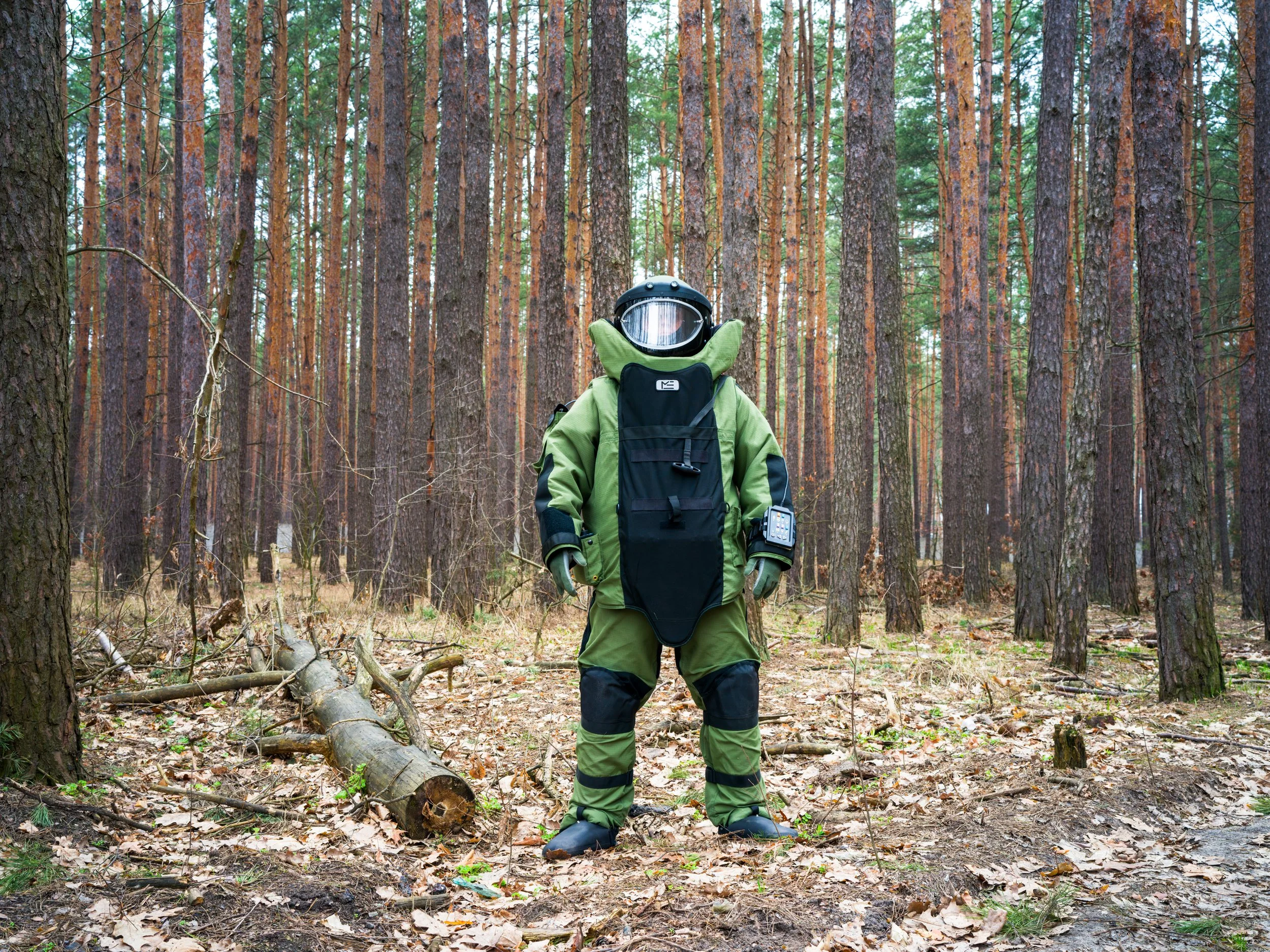
‘Yulik’, Explosive Ordnance Disposal Specialist (EOD). State Emergency Service of Ukraine (SESU).
Obolonskyi District. March, 2024.
With over a hundred types of ordnance used in Ukraine since the full scale invasion, sappers are constantly battling against new developments and anti-tamper devices designed to kill deminers. To make safe and defuse the most complex missiles and booby traps, the SESU relies on EOD teams. Throughout Ukraine there is a shortage of trained sappers and EOD specialists. There are currently 3500 sappers in the country.
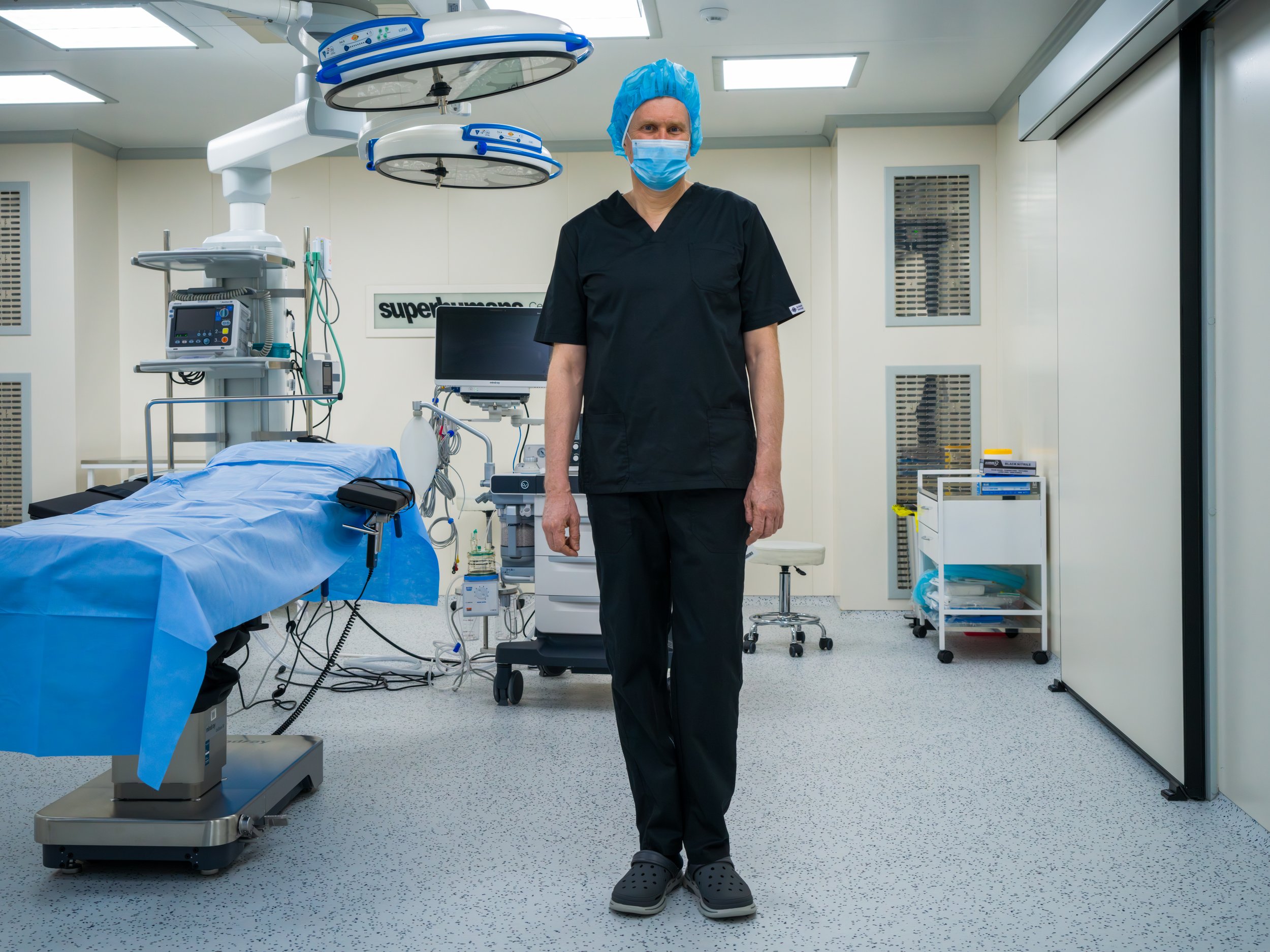
Andrii Vilensky. Medical director Superhumans.
Lviv. March 2024.
As well as providing free medical services in prosthetics, rehabilitation and psychological support, in 2024 Superhumans opened a surgical wing to for reconstructive surgery. This pioneering hospital works with a rotation of surgical specialists from abroad doing residencies.
"It’s a hospital where Ukrainian surgeons and the best overseas surgeons can meet and work together in the operation theatres, so our soldiers, our civilians, get the best treatment and rehabilitation” - Andrii Vilenksy
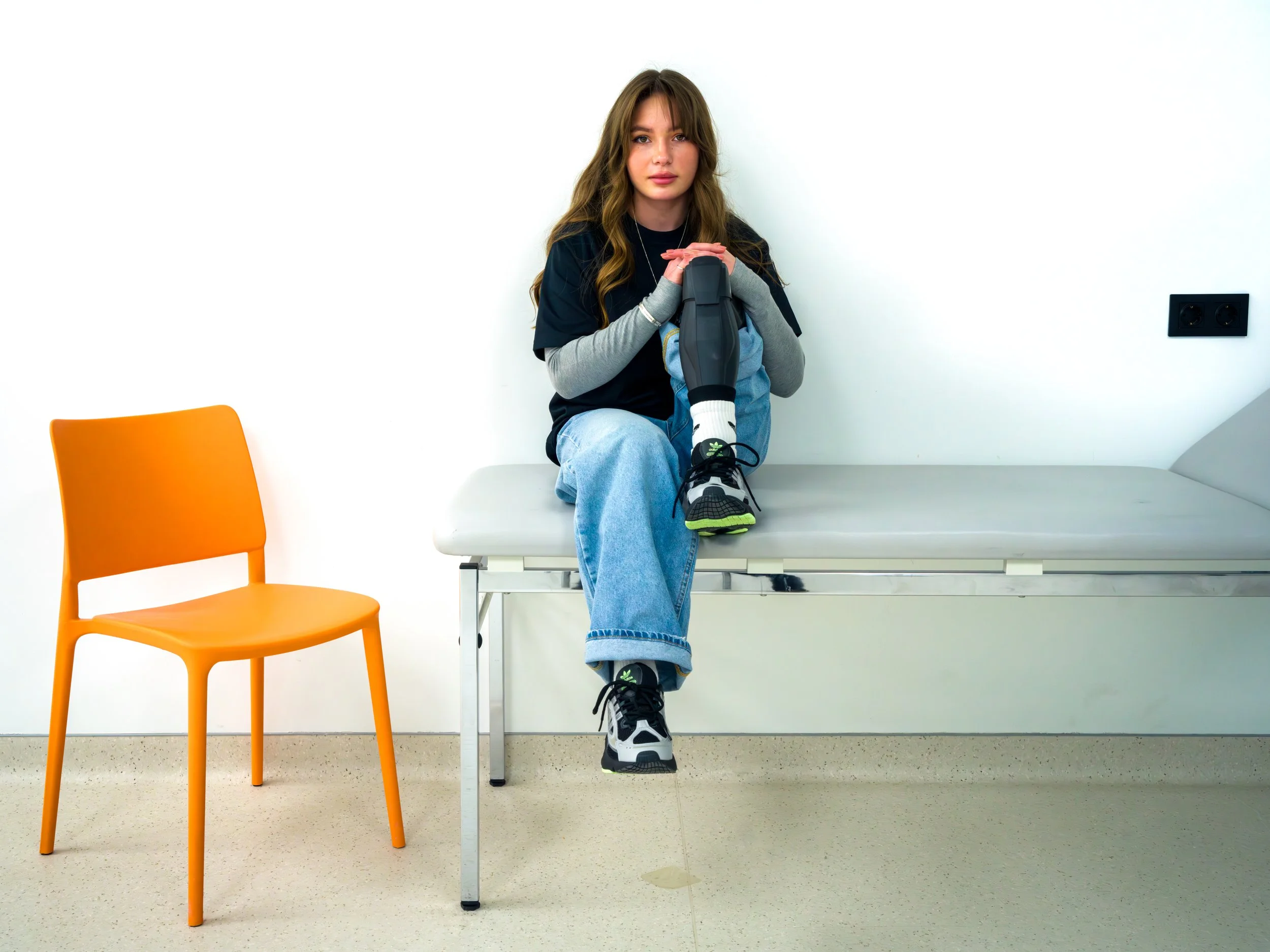
Rusya Danilkina. Influencer and Superhumans First Contact.
Lviv. March 2024.
Rusya was just 18 when she volunteered for the army. A year later she was severely injured when the vehicle she was travelling in was hit by a Russian shell. As a result of her injuries she lost a leg, and had to undergo intensive rehabilitation at the Superhumans Center in Lviv. She has since become an important voice for those undergoing similar experiences. Her public profile and example is not just helping those recovering from similar injuries, she reshaping how those with disabilities are viewed within Ukraine.
“Even now, there are moments when I think I won’t make it. The first technique is responsibility. Every time someone looks at me with disdain, pity, or any other negative emotion, I remind myself that I was the one who wanted to get there, I wanted it, I am responsible for the consequences, and I am proud of myself, so I shouldn’t be ashamed.”
- Rusya Danilkina
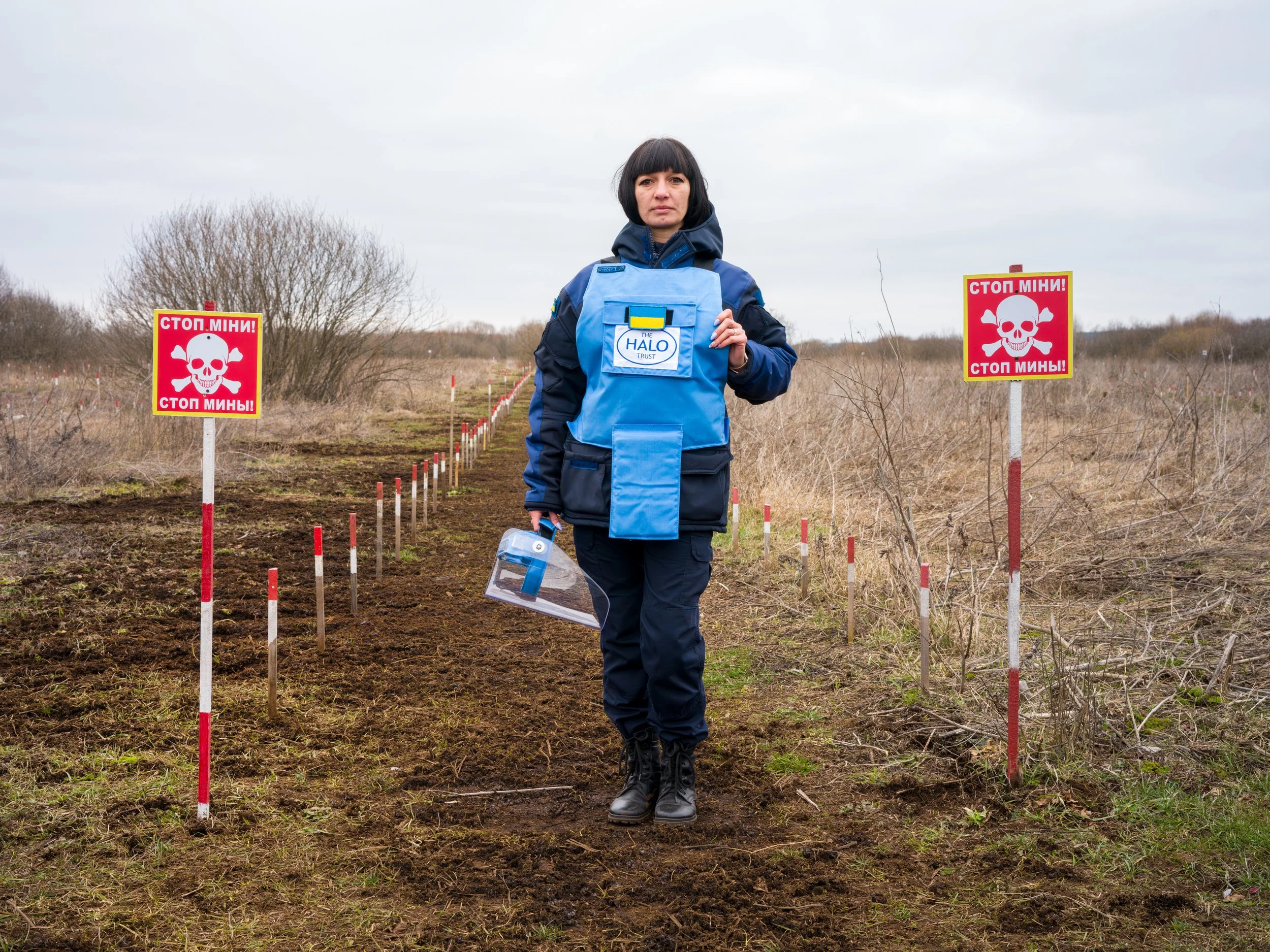
Oleksandra Yevdokimova. Deminer and Team Commander HALO Trust.
Brovary. March 2024.
Over the last two years, HALO Trust has scaled up its efforts to address the vast scale of explosive contamination, employing over 1,200 Ukrainian staff.
“From what I see, it's close to 50/50 proportion of men and women. Many of the women have with kids. I think each one of us should do the thing that they can do, to support the country” - Oleksandra Yevdokimova
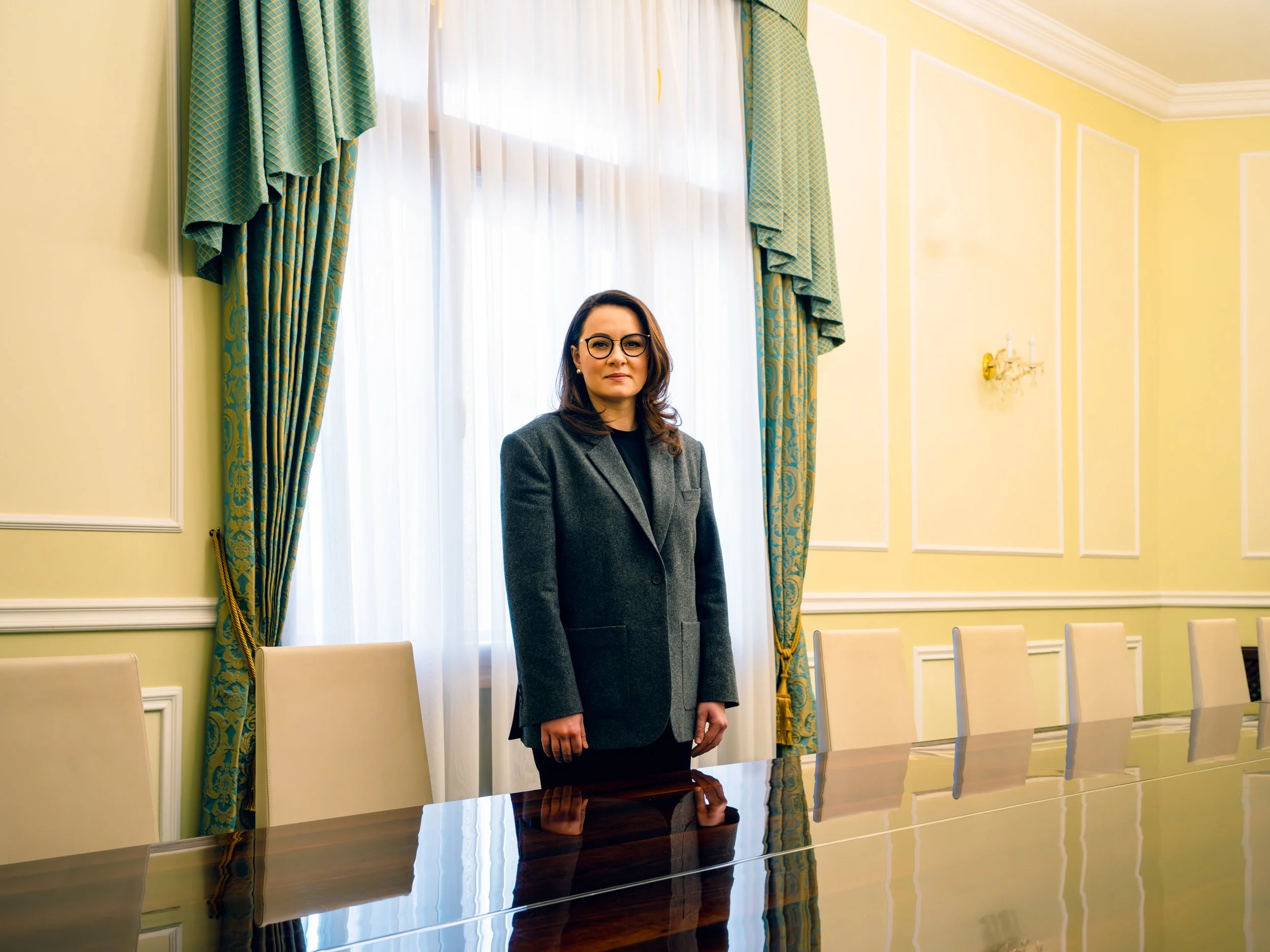
Yulia Svyrydenko. Minister of Economic Development and Trade of Ukraine.
Kyiv. March 2024.
The Ministry of the Economy of Ukraine is leading the government's humanitarian demining program, recognising the impact of landmine contamination on the country's agricultural sector.
“For me, it's very important to look at the economic side of this problem: Ukraine is an agricultural country, and up to 30% of its land is potentially contaminated. That's a huge loss” - Yulia Svyrydenko
People are not able to use [this agricultural land]. So we have to see how we can improve the procedures, how we can improve the technology and how we can improve the regulations to return this land to production as quickly as possible while prioritising safety. What we're trying to do right now is to find a way to return land to production fast, by opening up the demining market and by innovating. I think that Ukraine will find innovative approaches to speed up demining processes, and that we can replicate that experience for other countries too.
- Yulia Svyrydenko
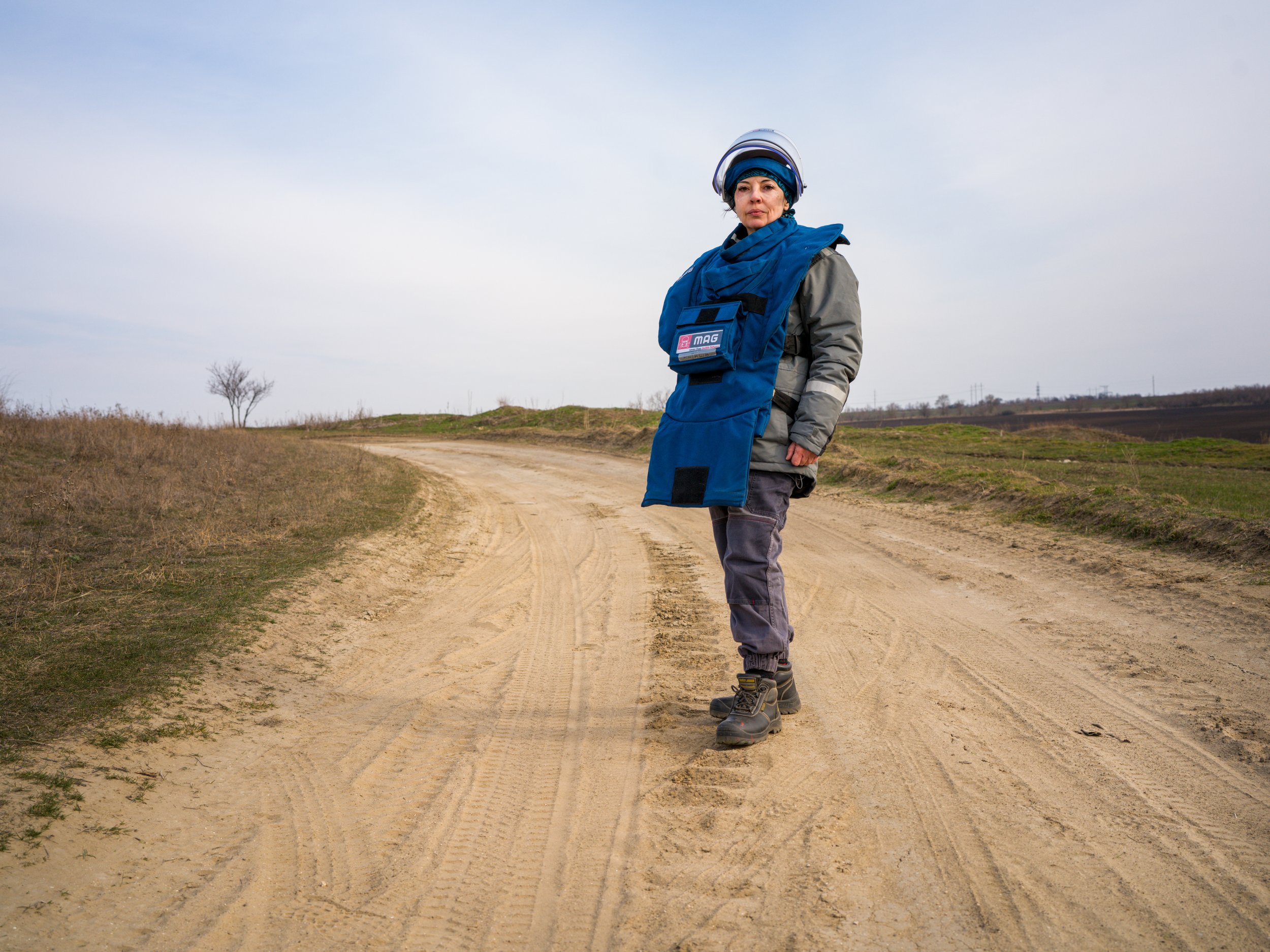
Nataliia Rohozianska. Deminer MAG.
Taborivka. March 2024.
"When the war started, I wanted to join the armed forces as a medic, but they didn't take me because I didn't have any combat medical knowledge. And I also think that my age was a problem, I’m 54. I think this is the most important thing to do now because as civilians, we have two options either to help military or to do our part of work in our civilian lives, which is why I joined MAG. I know that Ukraine is the most contaminated country in the whole world now. And the earlier we start the mining process, the other our children will see a safer future" - Nataliia Rohozianska
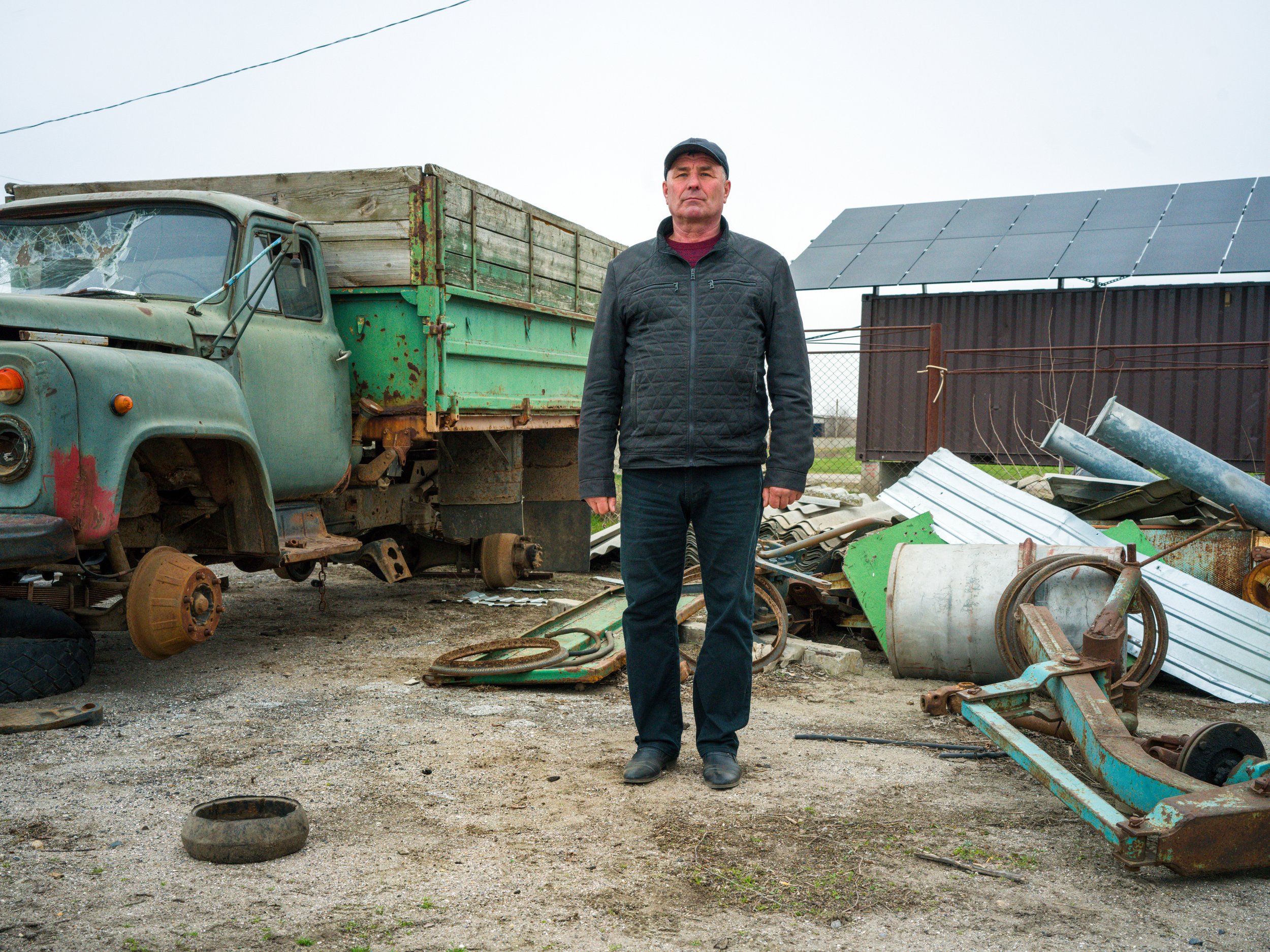
Serhii Tsetkov, Farmer.
Mykolaiv Oblast. March 2024.
Serhii’s farm was occupied by Russians and much of the land mined. At one point he was interrogated and tied up by Russian soldiers, and when they retreated from the area they destroyed much of his farm equipment. Rockets still regularly land on his property.
“I had 3500 hectares but at this moment I would say that I have 1300 I can use. I understand that it's very hard to demine this land I understand that it takes time. So of course, I worry from me and my colleagues, especially when we work for the first time on a newly demined field" - Serhii Tsetkov
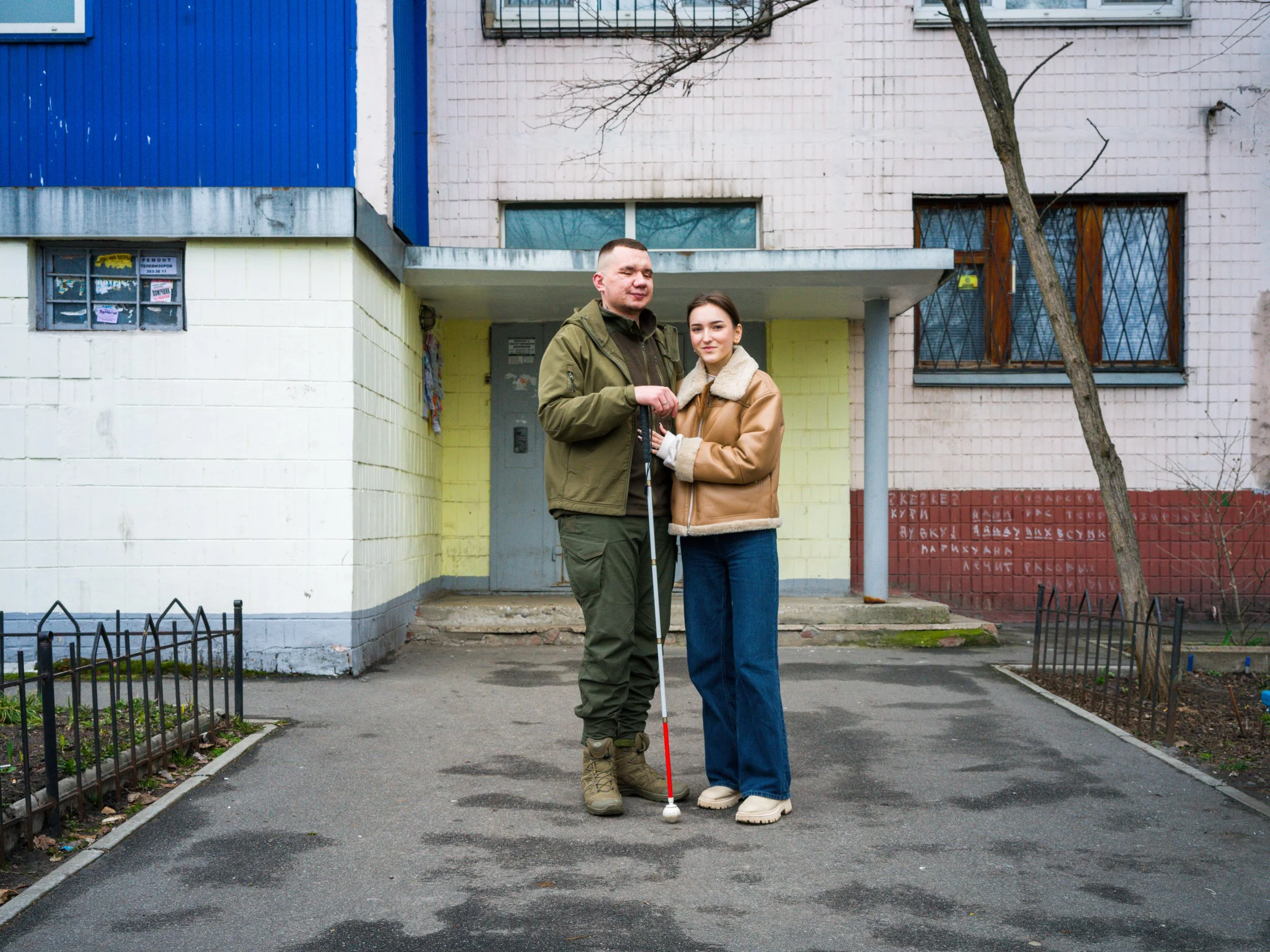
Vladyslav and Valeria Yeshchenko. Let's See The Victory Foundation.
Kyiv. March 2024.
Vladyslav was working as a sapper in 2022, whilst clearing a PFM 1 anti-personal mine, another mine self detonated starting a chain reaction. In the resulting explosion Vladyslav lost both his eyes, fractured his skull and partially lost his hearing.
After four months in the hospital and extensive rehab, Vladyslav Yeshchenko co-founded Let's See The Victory, a charity project that supports blind soldiers in their recovery. His wife Valeria is responsible for communications and management of the foundation.
Someone in military who has lost his eyesight will initially be in a very bad way. When he was in combat he felt like he was a Titan, but now he’s injured he needs assistance all the time, he feels like a burden. Many who have lost their eyesight think that their life has come to an end that they cannot live independently, and unfortunately, it can lead to suicide. The best way to rehabilitate this person, is to make them feel that people still need them and that they are proud of them. That’s why our charity retrains people to get a new career and our team of specialists help them to use computers, to use telephones, to go out to buy groceries alone; to show they can do all of these things.
- Vladyslav Yeshchenko
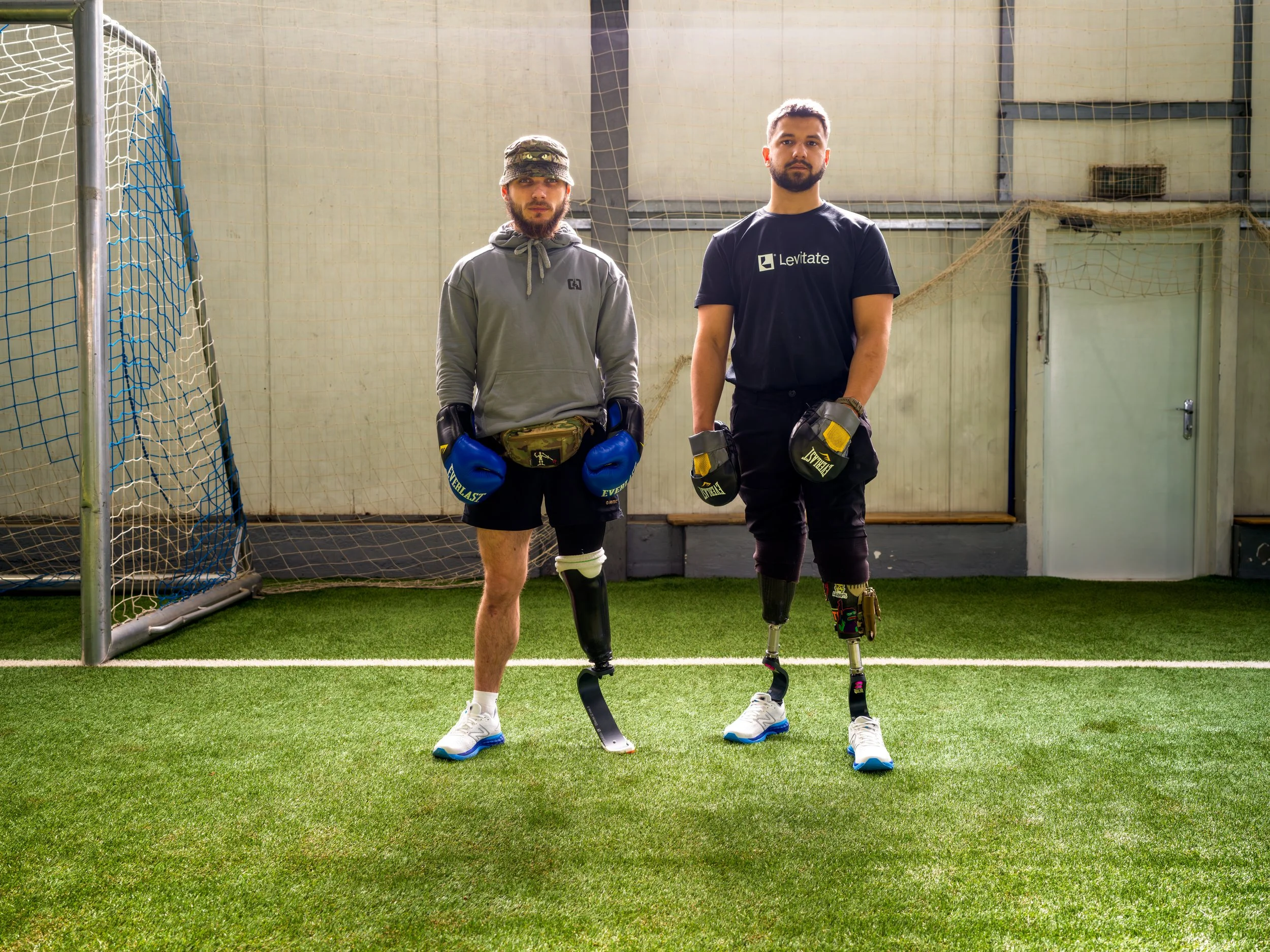
‘Kurt' and ‘Fez’. Levitate and U+ System.
Dynamo Kyiv Training Camp. March 2024.
Adaptive technology and advanced prosthetics mean amputees have increasingly high activity levels - and soldiers with amputations can, in some cases, even return to frontline service. This type of performance from affordable, durable prosthetic limbs would have been impossible a decade ago.
Danish company Levitate is one of the companies providing innovative designs to support such a large demographic of young, high activity amputees in Ukraine.
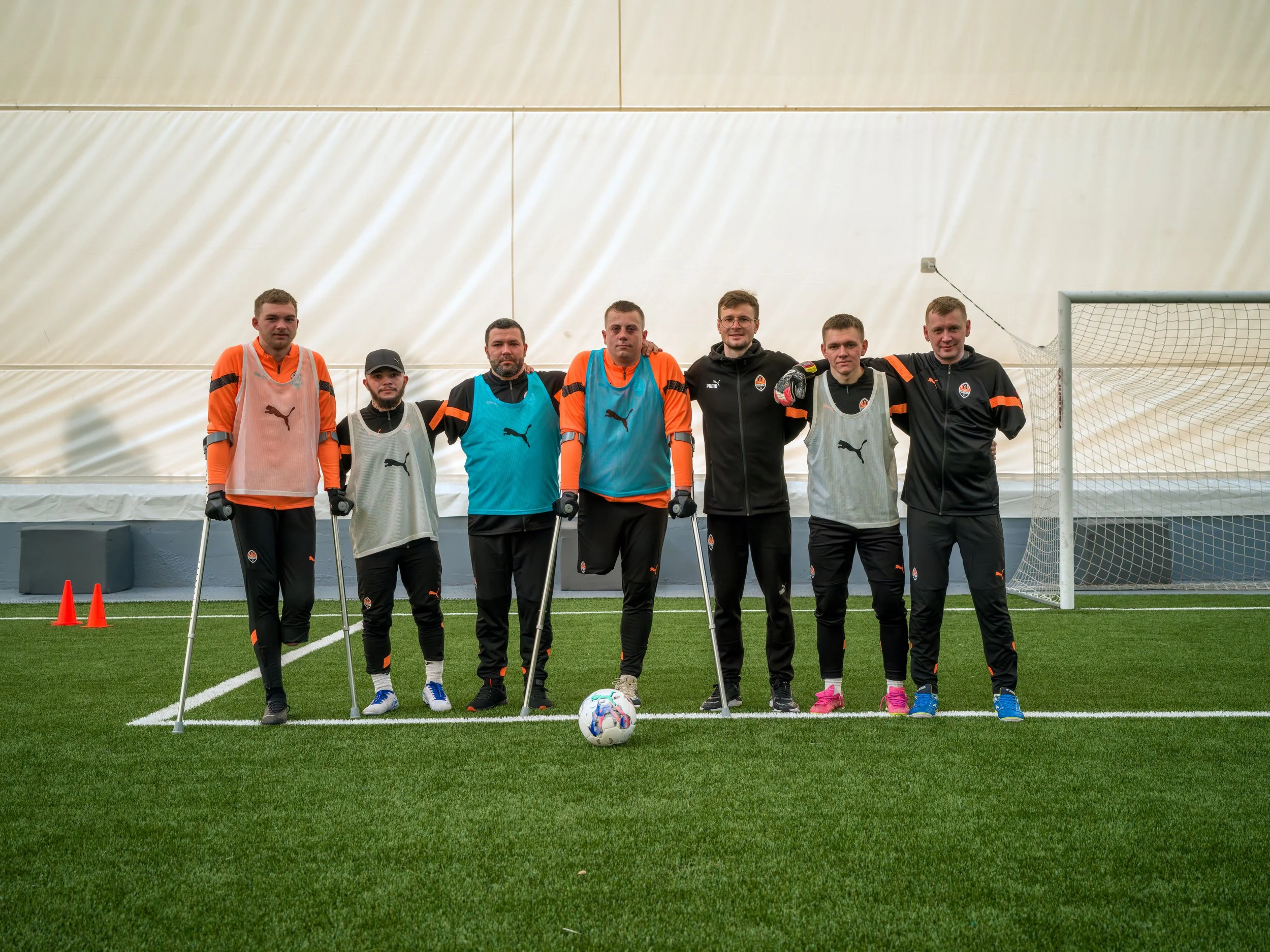
FC Shakhtar Amputee Football Team.
Sviatoshyn. March 2024
"Ukrainian soldiers, who sacrificed their health defending the country from the enemy, need the support of society more than anyone today. According to various estimates, about 50,000 servicemen in Ukraine have amputations due to injuries. FC Shakhtar is the first Ukrainian Premier League club to create a team for amputee soldiers. Our task is to create all the conditions so that these people can integrate and return to an active life as much as possible. We will rely on the international practice of adaptive football during the organization of the new team” - Serhii Palkin, FC Shakhtar CEO
Legacy of War Foundation was set up to do things differently: advocating for those affected by conflict, and running innovative, localised projects that involve communities from design to implementation.
Our Now Next Futures program is improving access to rehabilitation and providing training and employment to Ukrainians with disabilities. By 2030, Legacy of War Foundation-trained professionals will be providing rehabilitation to 1 million service users around the world.
Donate now.